
The Mobile Dwelling as the Final Frontier of Shelter: Idahoans Navigating the Month-to-Month Crisis in RV Parks
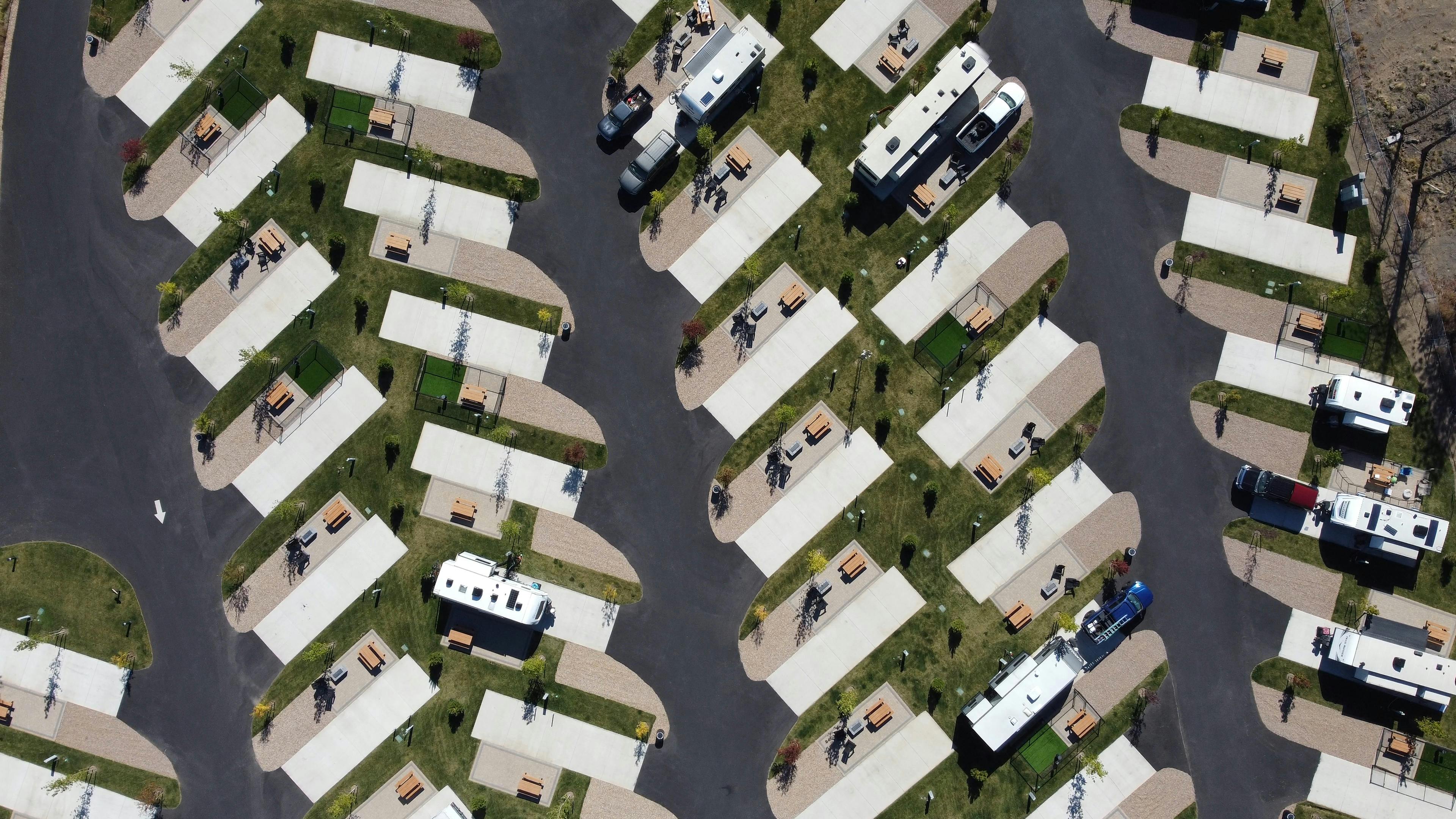
When the standard ladder of housing options—from renting an apartment to securing a mortgage—becomes entirely unscalable, individuals are forced to seek refuge in the last accessible strata of housing: the mobile or recreational vehicle park. These locations, once intended for seasonal visitors or those embracing a specific mobile lifestyle by choice, have been co-opted by necessity across Idaho, particularly in the booming Treasure Valley. The designation of ‘month-to-month’ tenancy in these parks signifies a fragile state of being, one step removed from outright homelessness, yet far removed from the security implied by a standard lease. These sites offer crucial, albeit temporary, lifelines, frequently providing utilities and a relatively low cost of entry compared to the exorbitant first-month-plus-security-deposit requirements of traditional rentals. The appeal is purely economic survival, a means to keep a roof—or rather, a metal shell—over one’s head while attempting to save, recover from a setback, or wait for an elusive opening in the conventional market. This reliance transforms these parks into de facto, though institutionally unsupported, affordable housing communities in a state where housing insecurity is rapidly becoming the norm for the working and retired populace.
Month-to-Month Tenancy in Recreational Vehicle Campgrounds
The term ‘month-to-month’ is the operative phrase defining the existential dilemma for many residents forced into this living arrangement. In the context of an RV park, this arrangement typically lacks the statutory protections and stability afforded to tenants under standard residential leases, creating a perpetual state of vulnerability for the occupant. A resident might pay a modest fee, perhaps only slightly above the rates cited in prior years—such as the reported \$625 per month in 2025 that included utilities at one Boise-area park—a figure that in late 2025 is an almost unbelievable bargain compared to the average Meridian rent, which hovers near the \$1,738 to \$1,999 range for a standard apartment. However, the park management retains significant latitude regarding renewal, potentially leading to staggered, unpredictable rate increases or the ultimate decision to cease offering the long-term option altogether. For those living in their own RV or trailer, this means continuous negotiation for the plot of land beneath their dwelling, while those renting park-owned units face similar instability for the structure itself. The RV park, therefore, becomes a precarious holding zone, not a sustainable community anchor, compelling occupants to remain hyper-vigilant about their financial standing and the park’s evolving policies. This inherent instability is the price paid for securing shelter below the skyrocketing market rate.
The Shifting Demographics of Long-Term RV Park Residents
The composition of the population occupying these extended-stay spots is far more diverse than stereotypes might suggest. Initially, some residents might embrace the RV lifestyle as a deliberate choice, valuing flexibility or the proximity to nature. However, the data emerging in late 2025 points to a significant and growing population for whom this living arrangement is purely a matter of economic duress. It includes essential workers, such as traveling nurses or service industry employees, who cannot secure housing near their place of employment due to prohibitive cost barriers. Furthermore, it encompasses retirees on fixed incomes who have been priced out of their long-term communities after decades of residency elsewhere, now depending on family assistance or meager savings to afford the low lot fees. Even college students find themselves in this predicament, illustrating that the housing affordability chasm spans nearly every socio-economic bracket within the working and retired populace. The shared characteristic is not a preference for mobility, but a mandatory tethering to the cheapest available shelter option within commuting distance of their necessary employment or support systems. These residents are often characterized by a deep, involuntary commitment to making a temporary structure function as a permanent home, despite the visible signs of transience in their surroundings.
Meridian’s Evolving Rental Landscape and the Disappearing Middle
Meridian, Idaho, as a burgeoning suburb experiencing intense growth within the Treasure Valley, serves as a clear microcosm for the pressures defining the entire regional housing market. The rental sector here is characterized by high demand and an influx of newer, more expensive multi-family developments, which simultaneously inflate median rental prices and reduce the availability of older, more moderately priced units. This dynamic is actively squeezing out the middle ground of affordability, leaving only luxury apartments at the high end and the RV/mobile home parks at the absolute low end. The story of Meridian’s rentals in 2025 is one of systematic replacement—the replacement of established, lower-cost communities with modern, higher-yield real estate ventures. The very structures that once provided an economic buffer are now being systematically removed from the housing inventory, intensifying the reliance on the remaining non-traditional options, such as the month-to-month RV lot, which, as of late 2025, commands an average apartment rent around \$1,738 or higher.
Displacement Pressure from Redevelopment Projects in Meridian Proper
A critical element driving the crisis in Meridian involves the strategic redevelopment of existing parcels, particularly those occupied by older mobile home parks. A significant example involves the Elm Grove Mobile Home Park near downtown Meridian, where the land is slated for redevelopment into a 90-unit apartment complex, a fate emblematic of the wider trend. Residents on the 40 lots at Elm Grove, who own their homes and pay as little as \$590 a month for the lot rent, are faced with the impossible task of finding another affordable lot to relocate to within the same region, as similar parks are also closing. While proponents of such projects often argue that increasing overall unit count will eventually ease market pressure, the immediate effect on current residents is profound displacement. The proposed solution of building replacement cottages on an adjacent lot, while perhaps offering a pathway for some, does not address the immediate need for relocation assistance or the significant cost differential between the old lot rent and the new unit’s required payment, even if subsidized. This process is a direct, tangible link between rising property values and the forced migration of long-term, low-to-moderate income residents.
The Erosion of Legacy Affordable Housing Stock
The closure of mobile home parks represents the outright elimination of what experts have called “some of the last affordable, unsubsidized housing we have” in the area. Since 2023, there has been a documented trend of at least ten park closures across Garden City, Boise, Meridian, and Canyon County, with over 21 parks closing in Garden City alone since 2011, as these sites transition from residential communities to future development sites. This pattern signifies a permanent loss from the housing ecosystem. These sites provided a critical housing type where residents owned the physical structure but paid only for the land lease, a financial arrangement that has become almost extinct in new construction. The loss of these parks accelerates the polarization of the market: a resident displaced from a park might find a one-bedroom subsidized unit costing close to a thousand dollars per month, a figure that is still a stretch for those accustomed to paying closer to six hundred dollars for their entire setup, including utilities, illustrating the economic cliff they face. The slow, continuous attrition of this legacy stock forces more people into the only remaining, highly competitive, and often inadequate temporary shelters, like the month-to-month RV parks.
Quantifying the Gap: Income Disparity Versus Shelter Costs
The true depth of the crisis in 2025 can only be understood by directly comparing local incomes against the median cost of housing, revealing a structural gap that conventional solutions have failed to bridge. This disparity is starkest when examining the situation in the surrounding rural counties, which were once considered the affordable hinterland for those priced out of the primary cities. The mathematics simply do not allow for conventional homeownership solutions for a significant portion of the workforce.
The Stark Realities for Low to Median Earners
For renters in Idaho’s rural counties—defined as those with a population under twenty thousand—the median income often hovers around forty thousand dollars annually as of mid-2025 analyses. Contrast this income level with the median home price in those same areas, which sits substantially higher, at over \$322,000. A household earning \$40,000 simply does not possess the requisite income stability or savings capacity to qualify for or sustain a mortgage on a home priced at that level, even accounting for regional variations in property values. This financial impasse means that even in areas previously seen as a viable escape from the metropolitan rental squeeze, these individuals remain trapped in the rental market, unable to transition to ownership. The slight warming of the real estate season in Ada County, with median prices approaching \$580,000 as of May 2025, does little to offer hope to this demographic, only reinforcing the severity of the exclusion from the ownership market. Statewide, the median home price, pushing toward \$500,000 in early 2025, requires an annual income near \$150,000 to afford half the homes on the market, far exceeding the statewide median household income of roughly \$60,000–\$74,000.
Cost Burden Metrics Across Idaho’s Geographic Divisions
The financial strain is empirically measurable through cost-burdened statistics. A household is generally considered cost-burdened when more than thirty percent of its gross income is dedicated to housing expenses. In Idaho’s rural counties, the data reveals that a staggering thirty-four percent of renters meet this definition of being cost-burdened. For homeowners in the same areas, the figure is a worrying twenty-two percent. These percentages illustrate that a substantial segment of the population, even those who managed to secure ownership in smaller towns, are living on the financial precipice, where any minor unexpected expense—a medical bill, a car repair—can immediately destabilize their shelter status. This vulnerability means that the people living month-to-month in RV parks are not an isolated subset; they represent the extreme end of a much wider continuum of housing insecurity affecting large swathes of the Idaho populace, with Idaho itself ranking as the second-least affordable housing market in the nation as of early 2025.
Case Studies in Unconventional Housing Solutions
The human element of the housing crisis is best captured not in statistics, but in the lived experiences of those navigating month-to-month survival within the temporary structures of recreational vehicle sites. These accounts illuminate the difficult trade-offs being made daily and the sheer effort required to maintain a semblance of normalcy under such transient conditions.
Personal Narratives of Necessity Over Choice
Many who occupy long-term spots in RV parks emphatically state that their arrangement is a necessity rather than a chosen lifestyle, a direct consequence of being priced out of traditional accommodation options. Consider the retired resident on a fixed income, who, having been priced out of an apartment community, relies on a family member to help secure and maintain a trailer on an RV lot because the monthly cost is the only figure they can possibly meet. This individual has deep ties to the community but is now housed outside the traditional definition of residency. These stories frequently involve visible signs of long-term occupation—decks, gardens, and personal improvements made to the trailers—suggesting a deep, if involuntary, commitment to making the temporary space function as a permanent home. The shame and frustration in these narratives are palpable; they are members of the community who can no longer afford to live within it conventionally. For example, residents facing park closures, like those at the recently shuttered Elm Grove in Meridian, are losing the security of a below-market rate, often under \$600 a month, which served as their only economic buffer.
The Role of Essential Workers in Temporary Lodging
The irony is perhaps sharpest when considering essential workers. Traveling nurses, for instance, often rely on the temporary, albeit cheaper, lodging solution afforded by an RV park while on a multi-month contract. They are crucial to the functioning of the local healthcare system, yet the cost of housing near their workplace—even for temporary contracts—is often prohibitive enough to force them into an RV site that may or may not have available monthly spots. While some RV resorts actively cater to remote workers and professionals seeking extended stays with amenities like fast Wi-Fi, for many, the necessity is purely driven by a lack of conventional options. When a key component of the local service economy cannot secure standard, reliable housing, it signals a deep structural flaw that jeopardizes the community’s ability to maintain essential services year-round, as these workers must commute from the limited, high-demand long-term RV slots.
The Pressure Points on RV Park Infrastructure and Management
The transition of RV parks from seasonal recreation hubs to de facto emergency shelters places immense, unforeseen strain on their physical infrastructure and administrative capacity, challenges that park managers in the Meridian area are acutely aware of as 2025 progresses. These facilities were engineered and permitted for short stays, not for long-term, heavy utility usage by a semi-permanent population.
Operational Strain on Campground Facilities
The basic infrastructure of many RV parks, including utility hookups (water, sewer, electric) and shared amenities like laundry rooms or washrooms, is often inadequate for the demands of year-round, continuous habitation. A short stay requires far less wear and tear than a year-long residency, even if the monthly fee is slightly higher than a nightly rate. When a significant percentage of the park is occupied by long-term residents, the collective demand on septic systems, water pressure, and electrical grids designed for intermittent use skyrockets. This necessitates unplanned and costly capital upgrades by the ownership, upgrades that are often difficult to finance given the uncertain future of long-term RV residency as land values continue to climb. Furthermore, some parks have specific rules for long-term stays, such as requiring RVs to be newer than a certain year or imposing strict rules on skirting and cleanliness, which are more easily enforced in a tourism setting than for a population struggling with basic upkeep. The result can be diminished service quality for all patrons, both the short-term tourists and the long-term residents struggling to maintain their homes.
The Challenge of Managing Waitlists and Capacity Limits
The demand for affordable, long-term RV park space far outstrips the available supply, a clear indicator of the wider housing shortage. Park managers report being inundated with inquiries, often having to turn away a dozen or more prospective residents daily because all designated monthly spots are occupied. A park like Mountain View in Boise has reportedly stopped adding people to its full-time monthly waiting list due to overwhelming demand, directing inquiries instead to week-to-week stays. The situation becomes so dire that waitlists, once a standard administrative tool, are often abandoned because they become functionally irrelevant—so long that they offer no realistic hope of placement in the near future. This administrative bottleneck confirms that the supply of these low-cost spots is not merely tight; it is functionally zero for newcomers. The management must also contend with the ethical dilemma of choosing who to serve among a desperate pool, balancing the needs of existing, established residents against the immediate crises of new arrivals.
Broader Implications for Treasure Valley Community Planning
The reliance on RV parks as an emergency housing buffer is not a solution that exists in isolation; it ripples outward, placing unforeseen burdens on municipal services and creating complex long-term planning challenges for the entire Treasure Valley region, including Meridian.
Strain on Municipal Services and Social Support Networks
When a significant population segment is housed in areas not zoned or equipped for permanent residential density, the gap in social services becomes immediately apparent. Residents in these RV situations often lack consistent mailing addresses, access to public transportation routes optimized for stable neighborhoods, or reliable connections to social workers, educational resources for children, or healthcare providers. Municipalities become responsible for monitoring sanitation, health, and safety standards in these informal residential zones, often without the corresponding tax base that traditional neighborhoods provide. The increased visibility of these temporary settlements, while a sign of the housing failure, also places stress on local law enforcement and public health departments who must manage a population segment that is, by its very nature, transient and difficult to track or support effectively through standard outreach programs. Furthermore, for families with children, the instability of month-to-month moves within RV parks creates significant educational disruption, compounding the social cost of the affordability crisis.
Future Projections for Housing Supply and Demand Balancing
Looking ahead from 2025, the trajectory suggests that without a massive, coordinated intervention in increasing the supply of truly affordable housing—not just luxury units or subsidized housing that still requires a high income threshold—the pressure on the RV and mobile home sector will only intensify. The current market forces—migration, high construction costs, and restrictive land use—show no signs of abating on their own. Projections must account for the fact that the pool of people nearing or below the median income is growing, while the inventory of low-cost options is actively shrinking due to redevelopment. Any successful balancing act will require addressing both ends of the spectrum: incentivizing the preservation of existing low-cost housing, perhaps through incentives for mobile home park owners to retain the land’s current use, and radically streamlining the development of mid-market, workforce housing that can absorb the population currently clinging to month-to-month RV spots.
A Year in Review: Tracking the 2025 Housing Momentum
To assess the evolution of this crisis, one must examine the measurable shifts in the real estate market throughout 2025. While the core problem remains intractable, the year has provided important data points on market temperature, sales activity, and the efficacy of attempted remedies.
Analysis of Residential Sales Velocity in the Past Year
Despite persistent high mortgage rates, which have historically cooled a market, the residential sales pace in 2025 showed continued, albeit modest, warming in key areas like Ada County, with more homes changing hands compared to the previous year. This activity indicates that while affordability remains a massive hurdle, sufficient capital is still flowing into the market to keep transaction volumes alive, thereby sustaining higher median prices—approaching \$580,000 in Ada County alone as of May 2025. In Canyon County, the trend of increased sales volume and rising prices was also evident. This suggests that market demand is incredibly resilient, preventing any significant price correction that might alleviate pressure on renters. The lack of a significant market cool-down means the underlying economic pressure forcing people into RV parks has not eased; if anything, the sustained high prices confirm the structural nature of the problem.
Evaluating Legislative and Local Governing Body Responses
Throughout 2025, local councils and state bodies have continued to grapple with the issue, holding conferences and discussing strategies to foster housing solutions. However, the reports suggest a slow response, often focused on multi-family development that takes years to materialize. The immediate crisis, characterized by residents living month-to-month in RV parks, requires emergency legislative action, such as temporary rent stabilization measures or emergency tenant protection ordinances for mobile home residents—a need highlighted by reports of 40% rent hikes following park ownership changes. Such tenant protections, however, have been slow to materialize or gain consensus at the governing level. The acknowledgment that the crisis is nationwide and driven by macroeconomic forces often leads to a defensive posture at the local level, where leaders feel constrained in their ability to enact the sweeping changes necessary to reverse the trend of displacement currently seen in Meridian’s rental sector. The gap between the urgent need on the ground and the measured pace of policy response remains a significant driver of the ongoing human toll.