
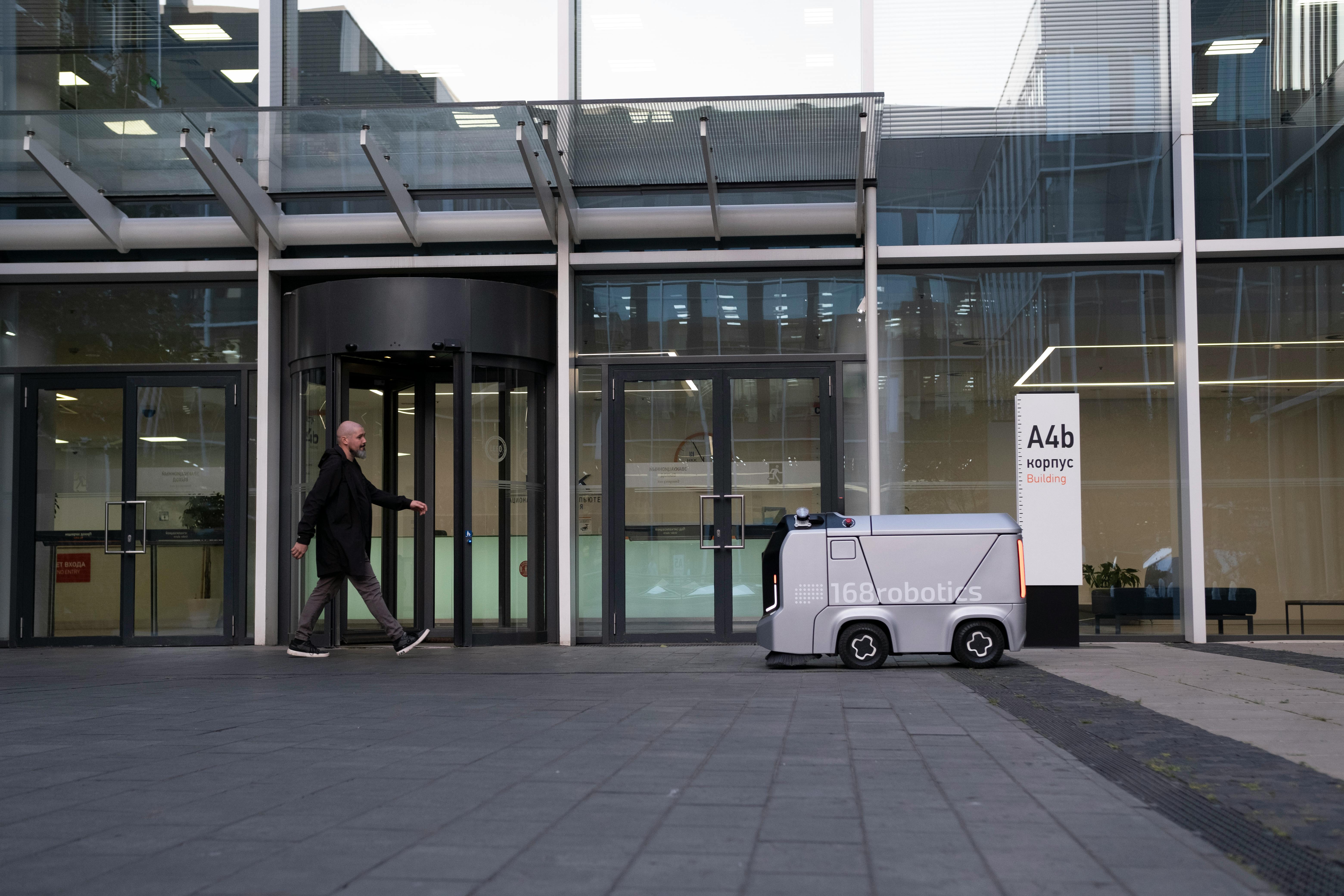
The Horizon of Next Generation AI Capabilities
Looking past the current efficiency gains, the immediate future of artificial intelligence in this industry points toward more creative and even autonomous applications that begin to redefine the roles of technology and human expertise simultaneously.
The Emergence of Generative Tools for Reporting and Documentation
The next major wave centers on generative AI models—the tools that create content rather than just classifying or predicting it. These generative tools excel at synthesizing complex, technical information into easily digestible formats for vastly different audiences [cite: two].
Consider the asset manager’s quarterly package. This used to require hours, sometimes days, compiling data points from spreadsheets, maintenance logs, and financial dashboards into a coherent narrative for an asset owner or an investment committee. Now, a simple natural language prompt can instruct the generative AI to produce a comprehensive summary. This output can include:. Find out more about AI tools for lease abstraction and negotiation benchmarking.
This functionality frees up substantial high-level management time, allowing principals to concentrate on strategic asset management decisions—like capital deployment or market positioning—rather than the mechanical task of report generation [cite: two]. The projected growth in generative AI applications shows this is not a passing fad but a core productivity driver.
Envisioning Truly Autonomous and Self Regulating Building Systems
The long-term, and arguably most capital-intensive, vision for facilities management involves creating buildings that are largely self-optimizing. This moves beyond the current state of merely providing recommendations to actively controlling building systems based on pre-approved, highly granular parameters. The fully integrated, autonomous building uses AI to connect directly with building automation systems, constantly making micro-adjustments to HVAC, lighting, and utility distribution.
These adjustments are not random; they are based on predictions of occupancy, current energy market pricing (is peak demand pricing starting in 30 minutes?), and complex internal comfort modeling that factors in factors like solar gain and current tenant density [cite: two]. In this environment, the AI functions as a constant, instantaneous manager, making thousands of minor decisions per day that collectively maintain optimal performance with minimal human intervention. Human oversight is reserved for significant capital events, novel operational challenges, or novel maintenance—things an algorithm hasn’t been trained on yet.
This progression from “Smart” (where a dashboard shows you the problem) to “Autonomous” (where the system fixes the problem before you see the alarm) is the key shift. As one major technology provider noted at a recent industry showcase, the goal is to keep “people at the center” by removing the repetitive firefighting that keeps them from focusing on occupant experience and long-term resilience [cite: five].
The Evolving Human Element in an AI Supported Ecosystem
A pervasive, if outdated, fear surrounding this technology is mass displacement. However, within commercial property management today—in March 2026—the narrative is decisively one of augmentation, not replacement. But this augmentation isn’t passive; it demands a fundamental shift in required human skills and strategic focus. You have to learn to manage the AI, or the AI will manage *you* out of the game.
Redefining Roles: From Task Execution to Strategic Oversight
As AI assumes the automation of routine administrative tasks, the delegation of basic work orders, and the monitoring of baseline operational performance, the value of the human component within property management is being elevated. This is an upgrade in job description, not an elimination.. Find out more about Competitive advantage of proprietary clean data sets in property management strategies.
Technicians, for example, are evolving into highly skilled diagnosticians and specialized repair experts. Instead of spending half their day on routine filter changes or scheduled checks, they are now focused on the complex failures that the AI flags as having a high probability of causing catastrophic system failure—preventative work that requires a human hand and specialized skill [cite: two, three].
Property managers, perhaps more dramatically, are transitioning from administrative overseers to strategic asset consultants. Their value proposition increasingly rests on their ability to interpret the high-level strategic insights provided by the AI—understanding macro market dynamics, negotiating complex service contracts based on predictive data, and managing the critical human relationships with tenants and vendors [cite: three]. Your experience is not being made obsolete; rather, it is being amplified and focused on the areas where human judgment, empathy, and nuanced communication are irreplaceable [cite: five]. To stay competitive, professionals must invest in understanding the impact of agentic AI on deal velocity and related transaction workflows.
Navigating the Competitive Landscape: Winners and Losers in Adoption
The firms that are effectively deploying AI across all these functional areas—leasing, operations, finance, and reporting—are establishing clear competitive advantages right now. Industry observers suggest that the next few years will delineate the market leaders from those who lag significantly behind [cite: one].. Find out more about AI tools for lease abstraction and negotiation benchmarking overview.
Success is not guaranteed simply by purchasing the newest software subscription. It requires a disciplined approach to data governance, a cultural willingness to integrate entirely new workflows, and a genuine acceptance of technology as a strategic partner, not just an IT tool [cite: one].
The Winners are those who embrace AI comprehensively—using it to drive revenue per square foot, enhance operational uptime, and deepen client relationships through speed and insight. They are the ones who have established the data standards needed to support complex AI-driven underwriting models.
The Losers are organizations that approach AI implementation piecemeal—maybe implementing a chatbot but ignoring data standardization—or those who fail to secure the necessary clean data infrastructure. These firms risk being fundamentally outmaneuvered by competitors who operate with greater speed, deeper insight, and superior operating leverage.
The integration of artificial intelligence in 2026 is therefore not just a technology upgrade; it is a fundamental recalibration of business strategy for the future of commercial property stewardship. The technology itself is quiet, but its impact is already creating a clear, quantifiable divide in the performance metrics across the entire industry.
Conclusion: Actionable Steps for the AI-Augmented Manager. Find out more about Synthesizing financial data for tenant suitability risk profiling definition guide.
We’ve seen that AI is actively transforming the transactional side of CRE, from the fine print of a lease to the initial vetting of a tenant. But the technology is only as effective as the data underpinning it, and its ultimate success hinges on how effectively human roles are upgraded to meet the machine’s capabilities.
Here are the essential takeaways and next steps for any firm looking to thrive, not just survive, in this new landscape:
- Prioritize Data Governance Over Tool Acquisition: Before you buy the next shiny dashboard, invest in cleaning, standardizing, and unifying your historical data. Without clean data, you’re just automating the process of generating bad decisions. Reviewing a firm’s **strategies for modernizing building management systems** and data pipelines is a more strategic use of capital right now.
- Focus on Augmentation in Contracting: Use AI for abstraction and benchmarking to strip weeks out of your lease review process. Then, deploy human experts to focus only on the high-stakes, contextual negotiation points the machine flags as outliers.. Find out more about Competitive advantage of proprietary clean data sets in property management insights information.
- Shift Skill Focus Upstream: Stop tasking high-value property managers with administrative follow-up. Re-train and re-focus leasing and management teams on strategic asset consulting, tenant relationship cultivation, and interpreting the high-level predictive reports AI now generates.
- Anticipate Autonomy: In facilities, move your roadmap from simple analytics to agentic control. The goal is a system that acts within defined safety parameters, anticipating needs before they become problems. This requires a focus on managing regulatory compliance in real estate.
The transformation is quiet, but the performance gap it creates will be loud. Are you building the data foundation required to harness this power, or are you still playing catch-up?
We encourage you to share your firm’s biggest AI challenge in the comments below—is it data quality, integration, or cultural adoption?